Your Life
MEET THE MUSKETEERS
Historical reenactments appeal to older Americans
Reenactors of the 1st Delaware Regiment fire—with blanks.
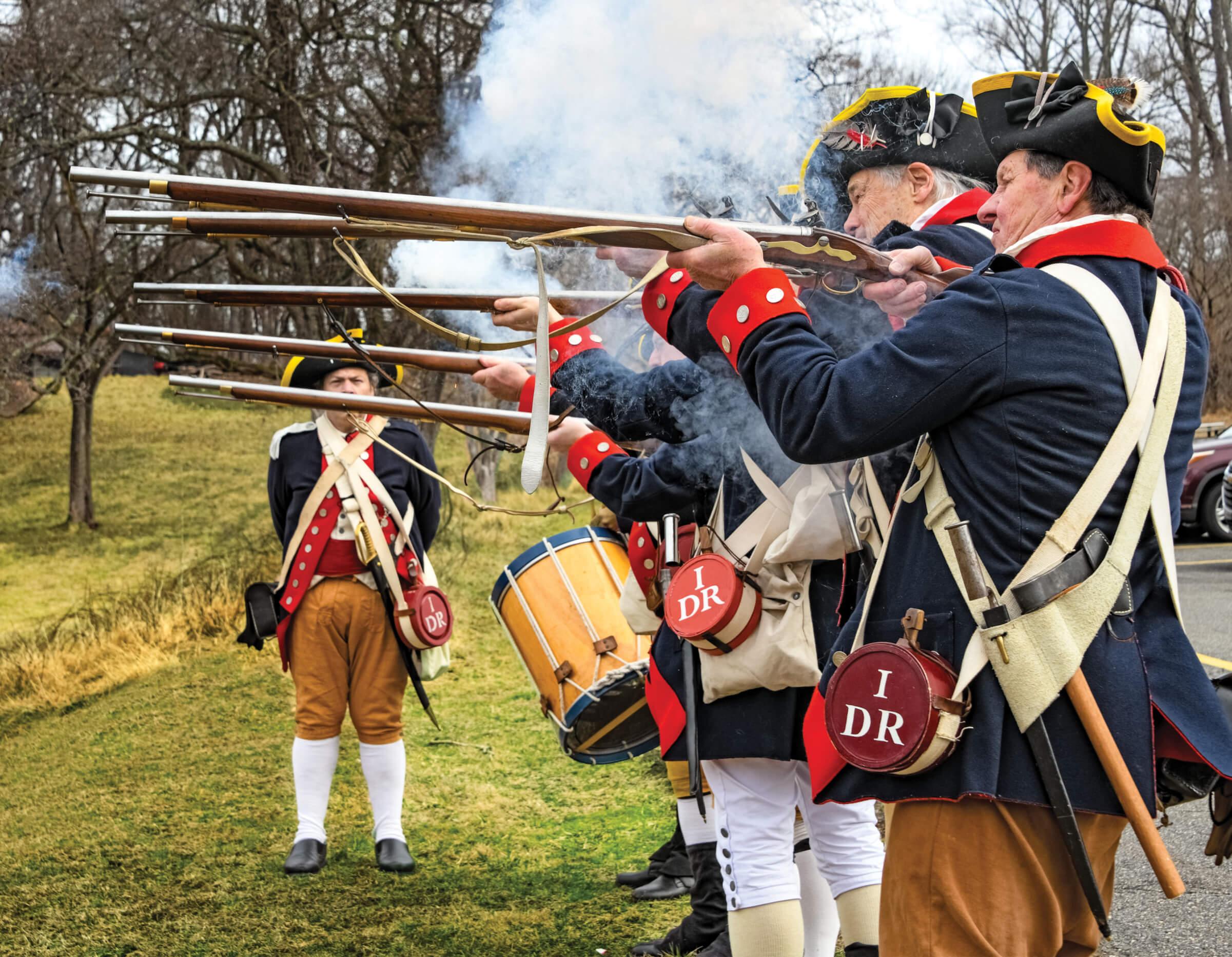
Reenactors of the 1st Delaware Regiment fire—with blanks.
“Make ready,” the lieutenant called out to his troops. “Take aim.... Fire!” In their blue coats and yellow-trimmed tricorn hats, the soldiers of the 1st Delaware Regiment pulled the triggers on their muskets.
The scene was a reenactment at Brandywine Battlefield Park in southeastern Pennsylvania. It was March 8, 2026, but it could have been Sept. 11, 1777, the day Gen. George Washington’s Continental Army took on British Gen. William Howe’s redcoats.
While American patriots and British forces fired on one another (using blanks, of course), women portrayed soldiers’ relatives, known as camp followers. They chatted with visitors and set out a light meal of apricots and figs, dried beef and pickled eggs; others mended uniforms.
As the United States celebrates its 250th anniversary this year, expect Revolutionary War and similar historical reenactments to receive new attention. It’s a practice that has gone on for more than 50 years, and one that many older people find is an active way to satisfy their love of history. “A lot of people started during the bicentennial, putting on uniforms and such,” says Bob Bendesky, 67, president emeritus of the 6th Pennsylvania Regiment living history group, based in Philadelphia. “Now those younger people are the older people.”
REFLECTING THE ERA
Across America, reenactors stage Revolutionary War–related events at the Margaretta Days Festival in Machias, Maine; Colonial Market Days in Lebanon, Indiana; and American Revolution: 60 Years War for Ohio in Perrysburg, among many others. And places like Colonial Williamsburg in Virginia and Plimoth Patuxet Museums in Massachusetts interpret colonial life on an ongoing basis.
Visitors come for the sensory experience—the sounds and smells of gunfire and the up-close visuals that can’t be captured in books or movies. Reenactors make the military drills, the clothing, firearms, and fife and drum as accurate as possible. Many have spent years studying this era. Stephanie Billon, 66, who portrays a civilian camp follower with the 1st Delaware Regiment living history group, took classes in clothing design to work on her costumes.
Reenactor Milton Sherman adjusts his glasses.
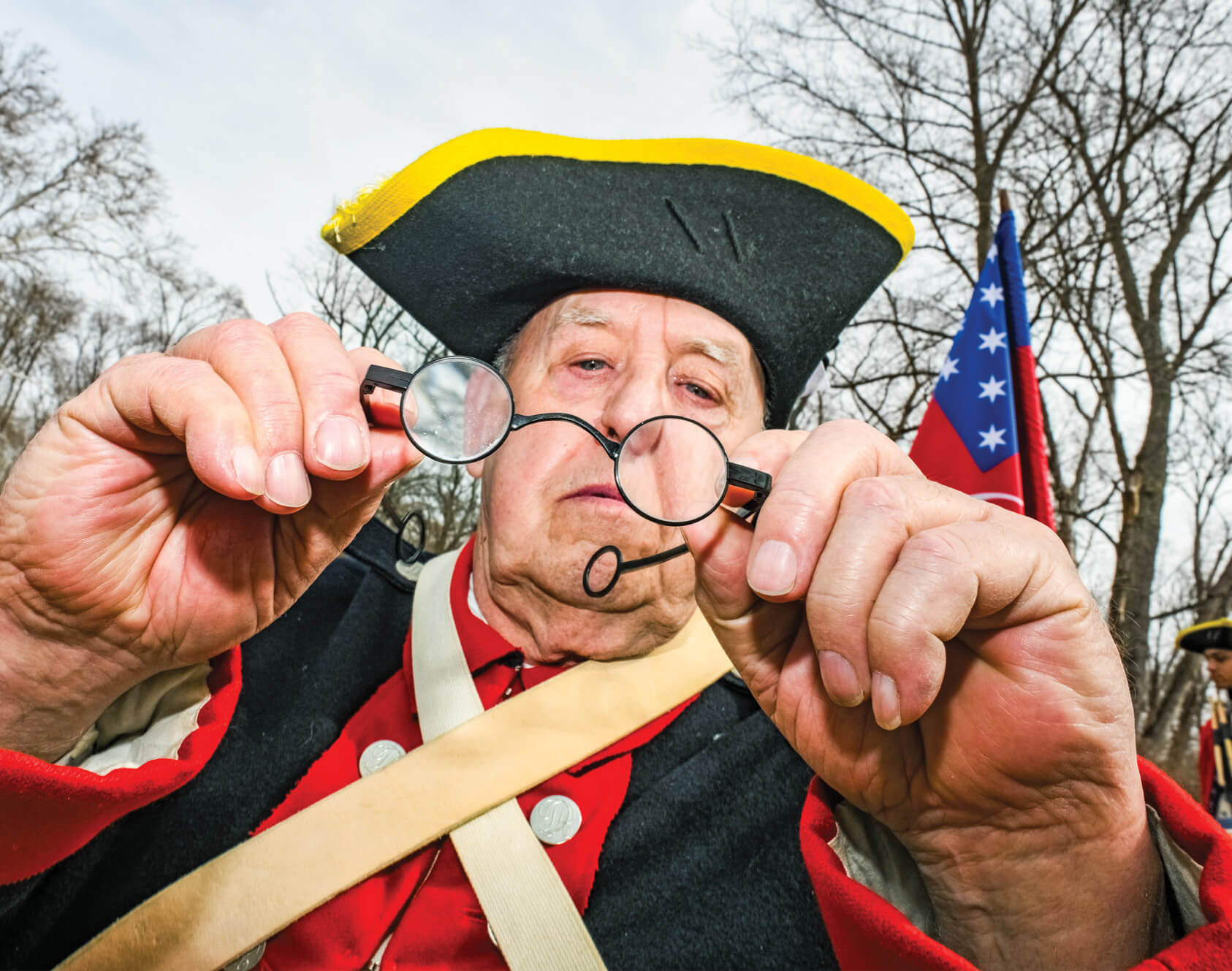
Reenactor Milton Sherman adjusts his glasses.
SHARING HISTORY
“Whether portraying rebels or loyalists, farmers or frontier folk, reenactors keep coming back for the camaraderie and to pass on their knowledge to visitors,” says Fane Wheeler, 56, an industrial mechanic who has done Revolutionary War reenacting for more than 10 years and was part of the March event in Pennsylvania. Reenactors may demonstrate how to start a fire using 18th-century tools or how to shoulder a musket.
“You learn that so much is still being learned,” says Chris Mlynarczyk, 54, president of the 1st Delaware Regiment. “For instance, the Delaware Regiment had multiple groups—African Americans, people from Europe, Native Americans.”
That sense of discovery is what reenactors enjoy. Billon, a retired intelligence analyst, demonstrates weaving using a tape loom and says, “We do living history because it creates a link between the present and the past.”
Ellen Ryan has written for U.S. News & World Report, The Washington Post and Costco Connection.
HOW TO GET INVOLVED
Interested in attending a Revolutionary War event? Search online for “Revolutionary War 2026” and “living history,” “250th anniversary events” or “reenactments,” along with your state or region. You can also talk with organizers about what it takes to join as a reenactor in upcoming events.
Go to aarp.org/america250 to read more stories about the United States’ milestone anniversary.