Your Money
SHOCKER MEDICAL BILLS … AND HOW TO AVOID THEM
Get health care that doesn’t cost an arm and a leg
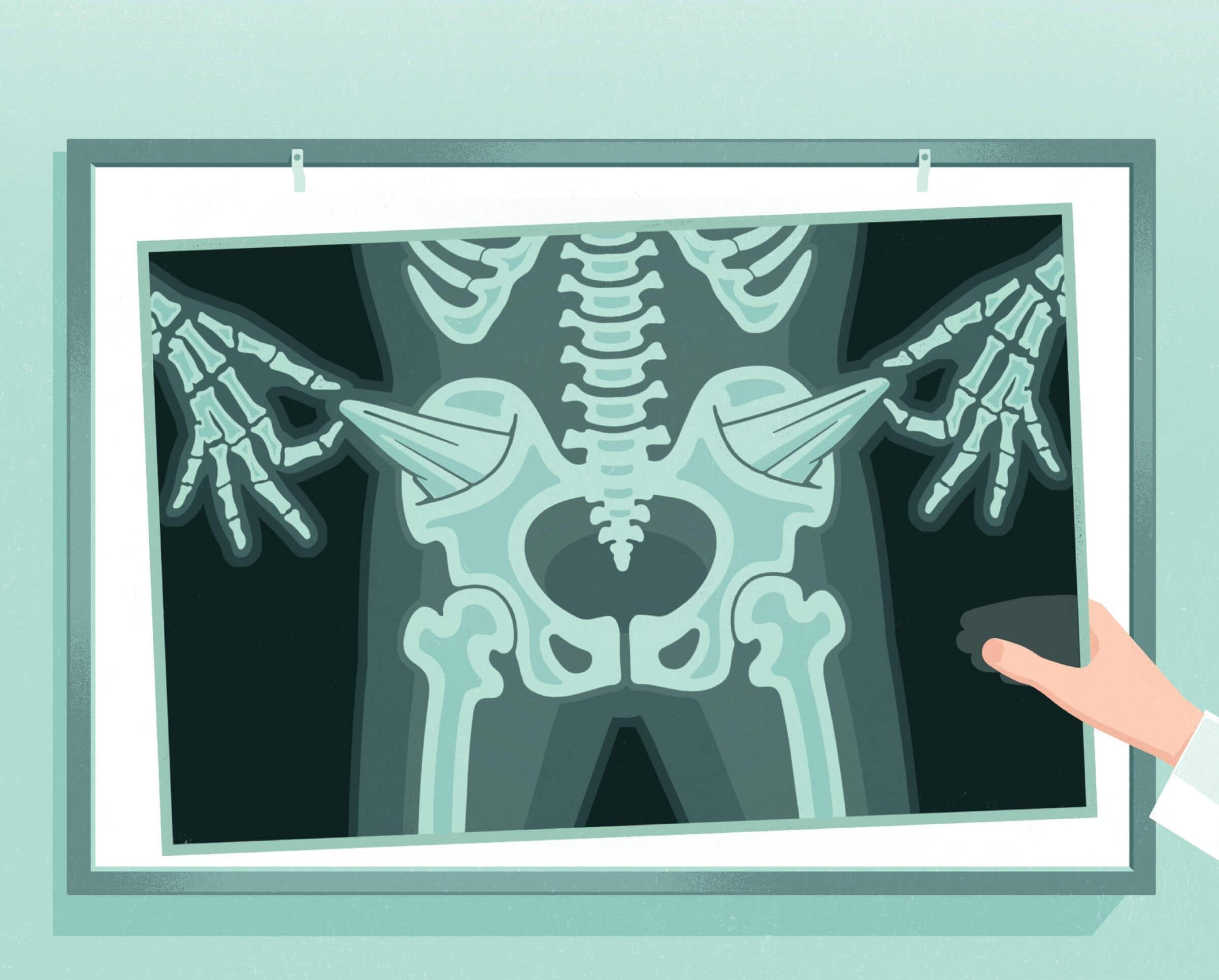
Last fall, Karin Miller drove herself to a freestanding emergency center near Chattanooga, Tennessee. She had mistakenly taken an extra dose of her blood pressure medication, and she was worried. “They told me I needed to be under observation for the next 12 hours and transported me to a nearby hospital by ambulance,” says Miller, 62, a retired pediatrician.
Although Miller’s blood pressure had fallen low, she was fine. But her bill wasn’t: The 2-mile ride cost $3,618. “My jaw dropped,” she says. “I thought it was a mistake.” An out-of-network ambulance had taken her to the hospital, and her health insurance covered only her plan’s in-network fee: $266. She was on the hook for the rest—all $3,352 of it.
Unexpected medical bills like Miller’s are straining the budgets of Americans, say researchers and consumer advocates. These charges help explain why 13 percent of Americans ages 50 to 64 and 7 percent of Americans 65-plus carry medical debt, according to a recent AARP report. And they can be harmful to your health, not just your wallet. Fear of high out-of-pocket costs prompted 35 percent of adults ages 50 to 64 and 17 percent age 65 and older to skip or postpone health care, the nonprofit research group KFF found recently. “It is very difficult for people to know in advance what their health insurance covers, what the price of care will be and what their responsibility for that bill will be,” says Patricia Kelmar, senior director for health care campaigns at the nonprofit advocacy group PIRG.
Here’s what to know about five pricey medical charges that can catch you off guard and how to protect yourself against them.
SURPRISE AMBULANCE BILLS
The No Surprises Act of 2020 protects patients from sky-high out-of-network charges for emergency care and for most nonemergency care at in-network hospitals. But one set of expenses isn’t included: emergency ground ambulance transportation to a hospital and nonemergency transport from one medical facility to another. As a result, hundreds of thousands of commercially insured Americans may be ending up with big ambulance bills each year. On average, you could pay $734 for a private sector transport, according to a 2023 Health Affairs study; Kelmar has seen bills as high as $10,000.
What you can do: First, verify that your ambulance bill reflects any payment from your insurer. If it doesn’t, tell the ambulance company to submit it for payment. After your insurer has made its payment, get an itemized bill from the ambulance service and look for errors. For a large between-facility bill, ask the emergency room for a letter indicating the medical need for the ambulance, then ask your health plan to cover more—a tactic Kelmar says might work. Also, the ambulance service may give a cash discount, agree to a lower fee or offer a payment plan. Miller, for example, got her charge cut to $1,200, which she’s paying off at $50 a month. Don’t ignore a bill; it could end up with a collection agency or even in court, Kelmar says.
Twenty-four states have laws addressing surprise ambulance bills, but protections vary by state; for example, not all cover nonemergency transport. And these laws apply only to state-regulated plans, explains Jack Hoadley, research professor emeritus at the McCourt School of Public Policy at Georgetown University. (Your insurer or employer should know whether your plan is state-regulated.)
You’re in no position to ask for an in-network ambulance in an emergency, but you should request one, if available, for non-emergency transport, Kelmar says.
BIG BILLS ON HIGH-DEDUCTIBLE HEALTH PLANS
Forty-two percent of Americans with private health insurance are in high-deductible health plans (HDHPs) requiring them to pay full price for most health care until they meet large annual deductibles. For an HDHP, the annual deductible is at least $1,700 for an individual or $3,400 for a family. Even people on Medicare face large deductibles that can lead to big bills, including a $1,736 deductible for a stay in a hospital or skilled nursing facility coming more than 60 days after a prior stay.
Though high deductibles generally mean lower monthly premiums, they also can expose you to sudden, wallet-emptying medical expenses. “When you get a bill with a high-deductible plan, it can be large, such as $250 for a doctor visit instead of a $40 copay,” says Risha Gidwani, an associate professor in the University of Colorado department of medicine’s division of health care policy and research. A medical crisis, like a cancer diagnosis or injury, could generate thousands of dollars in sudden bills for tests and treatments before hitting a deductible.
High deductibles can cause people to skimp on needed care, Gidwani says. In a 2024 JAMA Network Open study of people with diabetes, for example, people with HDHPs were 15 percent more likely to have a stroke, 35 percent more likely to be hospitalized for heart failure and more than twice as likely to go blind or have end-stage kidney disease.
What you can do: Some HDHPs come with health savings accounts that let you save, tax-free, to cover medical bills; some employers contribute to these accounts too. You can also take advantage of free wellness visits and health screenings, which many people enrolled in HDHPs skip.
FACILITY FEES
As more doctors’ practices are absorbed into hospital systems, more patients are billed for “facility fees” by primary care doctors and specialists, the Health Care Cost Institute reported in 2025. “In many cases, the bill comes weeks or months after your visit, so it’s hard to budget for,” says John Hargraves, HCCI managing director of data strategy and analytics.
“We’re starting to see facility fees charged to patients who are in a doctor’s office miles away from a hospital, getting a regular checkup or an allergy shot or even having a telehealth visit from home,” says Kelmar. Those fees can range from $50 to thousands of dollars, she adds. They may not be covered in part or at all by insurance; Medicare enrollees may have to pay a portion of a facility fee too. A 2025 PIRG report, however, found no evidence that charging hospital fees for outpatient care improved patient outcomes.
What you can do: Before a medical visit, call the office to ask whether there’s a facility fee and how much it is, Kelmar suggests. If they don’t know, ask if a hospital owns the practice and check with that hospital’s billing department. In some states, health systems are required to post a notice about the fees, she says.
UNPREDICTABLE HOSPITAL COSTS
Insurer-negotiated rates for hospital procedures are rising faster than inflation. They also vary among health plans and among hospitals in the same plan. In 2025, for example, the Congressional Research Service noted that insurers’ rates for a major knee or hip replacement with complications varied from $19,599 to $102,369 across different Dallas hospitals. “If you have to pay 20 percent coinsurance for a procedure, a $10,000 difference between what Hospital A and Hospital B charge could mean paying $2,000 more,” says Yang Wang, an assistant research professor at the Johns Hopkins Bloomberg School of Public Health.
What you can do: A higher hospital bill doesn’t mean better care. Check prices on hospitals’ websites, but although hospitals are required by law to post them, not all do. If a hospital doesn’t show prices online, call the billing office. And consider paying cash: In a 2023 study of 70 hospital procedures across the U.S., Wang and a team found that hospitals’ cash prices for procedures were less than or equal to their median insurance-negotiated rates nearly half the time. Thus, patients with an HDHP who were unlikely to meet their deductible might save money by not going through their insurer and by paying the cash price instead.
EXPENSIVE TESTS
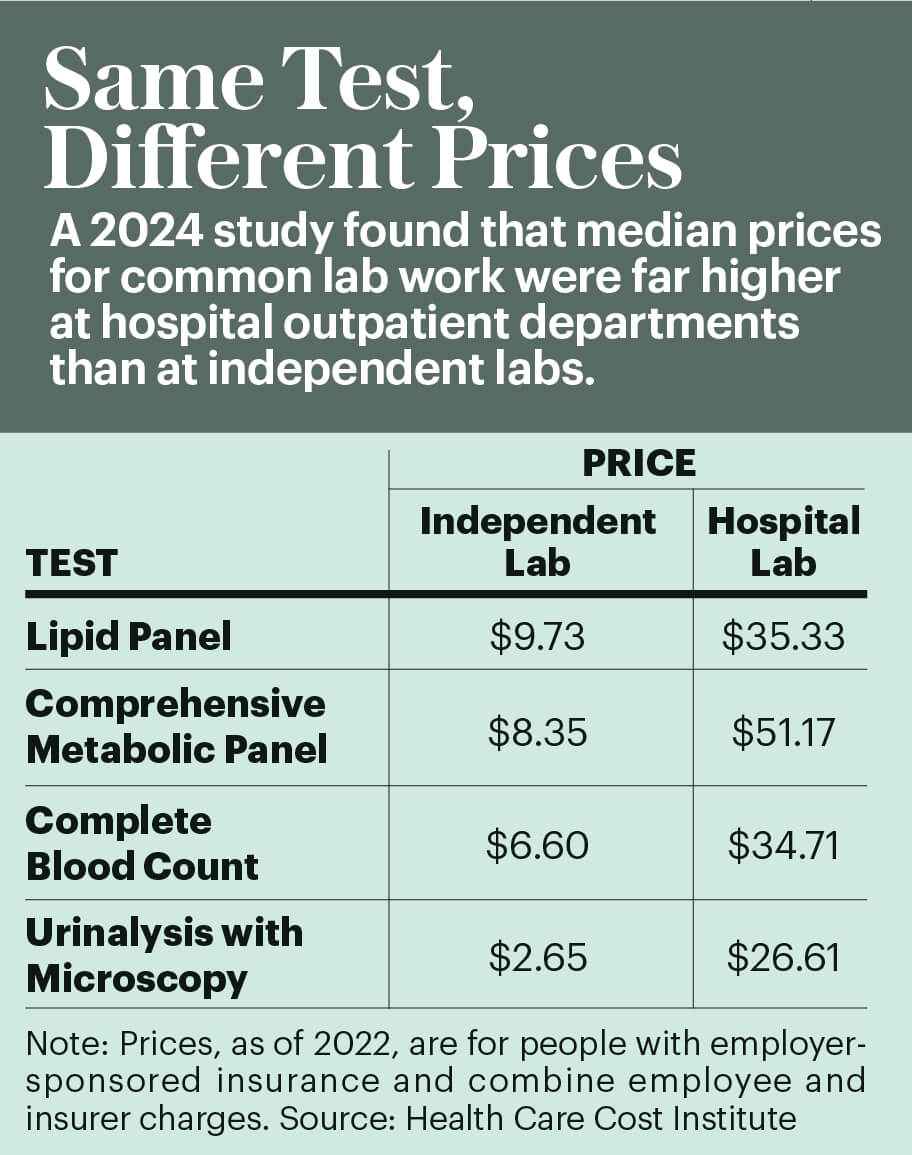
Lab work and imaging tests can be far costlier in a hospital outpatient center than at an independent test site. But patients are often unaware of affordable alternatives or feel obligated to use a hospital facility. A 2024 HCCI report found that for a general health panel, the median hospital price was $129, compared with $31 at a physician’s office. Imaging rates can also vary widely: A 2021 study in the Journal of Health Economics found that the average patient’s out-of-pocket cost for a lower-leg MRI was $307. If patients went to the lowest-priced provider within an hour’s drive, their cost would be, on average, $171.
What you can do: Check online hospital price lists, see if your insurer has price estimates and try calling independent lab test and imaging centers. Ask your doctor whether there’s a good reason to get a test at a hospital facility rather than a lower-priced center. “Asking about the potential cost of care when it’s recommended—not afterward, when you get the bill—is one of the few things patients can do to avoid unexpected medical bills,” Hargraves says. “It may feel awkward, but it’s worth it.”
Sari Harrar is a contributing editor to AARP THE MAGAZINE.
Visit aarp.org/medicalbills to learn 25 great ways to lower your health care costs.