Your AARP: Where We Stand
THE POWER OF CONNECTION
AARP can help you build ties in an isolating world
Courtesy Alice Swank
Courtesy Alice Swank
We are living in a moment of extraordinary possibility. We can work from anywhere, get what we need delivered to our door and manage our day-to-day with just a few taps on a screen. But in optimizing our lives for speed and efficiency, we have lost many of the moments that once connected us—a quick hello, conferring over coffee, a chat with the cashier who remembers your name.
At AARP, we see the effects of this clearly and are working to help our members establish more social connections with tools and guidance that make it easier to meet people, stay in touch through technology and build meaningful relationships around shared interests. You can go to aarp.org/connect to explore all these opportunities year-round.
This summer, we are expanding our efforts as part of our national focus on social connection, hosting hundreds of gatherings across the country and launching our Boost Your Social Life Challenge, built around three simple ideas: purpose, people and play. It prompts you to take small steps like reaching out to someone new or doing something you enjoy alongside others. As you complete the challenge, you can earn points in our AARP Rewards program that can be redeemed for gift cards, charitable donations and more. Go to aarp.org/GetSocialNow for details.
This matters. Nearly 4 in 10 adults over 45 report being lonely, according to AARP research. Staying connected can become even harder over time. Life transitions reshape our days. Retirement can mean fewer daily interactions. Caregiving can narrow our world. Loss—of a spouse, of siblings, of friends—can leave a silence that is hard to fill.
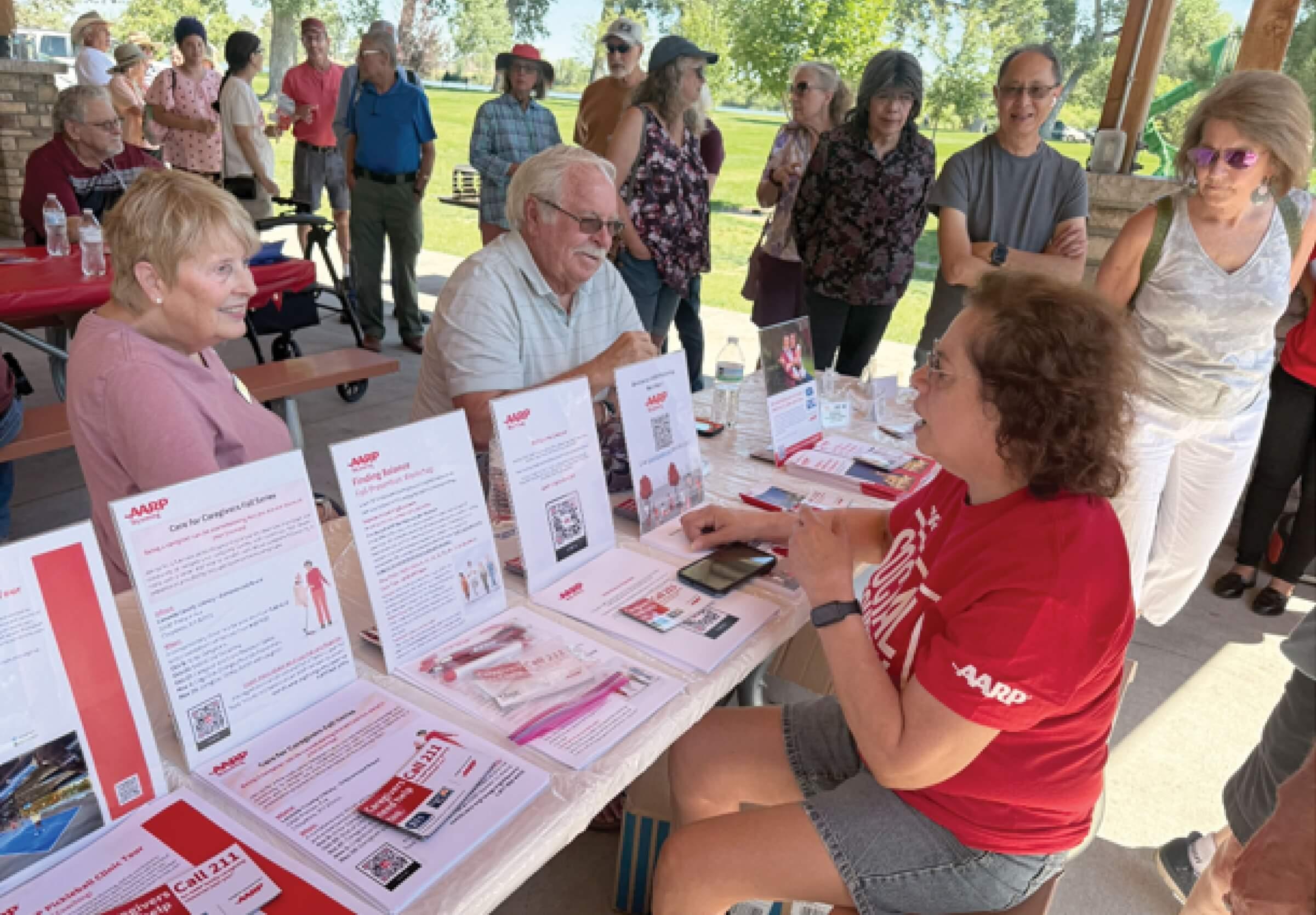
For Alice Swank in Wyoming, that isolation came after years of caregiving. When her husband died, she found herself alone and unsure of what came next. That’s when she decided to walk into her local AARP office. It became a turning point. Today, Alice is an AARP volunteer and part of her local community action team. And she has found her people. The women she met through AARP have become her active social circle.
That kind of change can be of major significance. Isolation has real health effects, increasing the risk of heart disease, stroke and dementia. Connection works powerfully in the opposite direction, reducing stress and enhancing cognitive function. Social connection is a fundamental determinant of health, belonging in the same conversation as our physical and financial well-being.
At AARP, we take social isolation seriously. We study this issue. We listen to our members. And we show up as a wise friend, providing countless opportunities for connection: You can join a volunteer effort, attend a local event or connect from home through virtual classes, games and interest-based groups.
Alice’s story is a reminder that connection is about taking back our health, our well-being and our sense of belonging. And at AARP you can be part of that, alongside millions of adults age 50 and up. That is the power of this community, and there is a place for you in it.
If you are not sure where to begin on your path to social connection, begin with us.
SENIOR PLANET
Go to seniorplanet.org to learn more about Senior Planet from AARP. And visit aarp.org/tech to read the latest on technology news for older Americans.