Q&A Buddy Guy
“AS LONG AS PEOPLE ENJOY ME PLAYING, I’M GOING TO GIVE YOU THE BEST I GOT”
Legendary bluesman Buddy Guy is reaching new audiences after a cameo (and song) in the hit movie Sinners
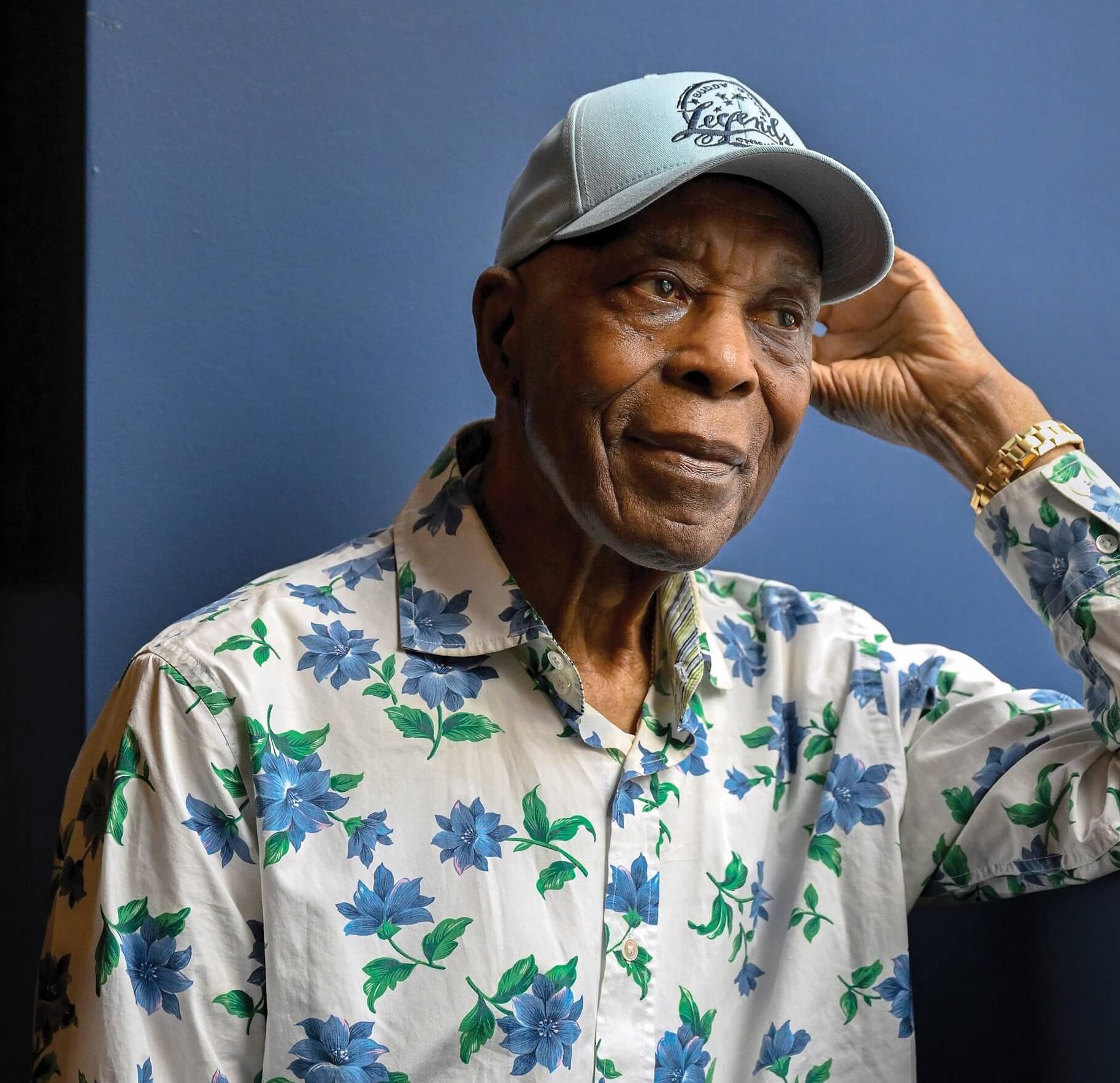
You accepted the role in Sinners in part because of your kids and your grandkids. What did they tell you that made up your mind?
They probably know more than I did about the movie thing, that you’ll be more exposed by doing this than anything else. Whatever it takes to help the blues stay alive.
What’s your secret to a close family?
I’m from Louisiana. I love cooking, better than I do playing the guitar. When they come over to my house, I have to hide my food because they won’t leave that much for me. And I’ll say, “Why don’t you cook?” And they’ll say, “Granddad, I can’t cook like you.”
You turn 90 in July. How do you stay sharp?
I don’t overdo things. Some of the older guys—Muddy Waters, Howlin’ Wolf, Lightnin’ Hopkins—they used to tell me, “Don’t overdo it.” If you overeat, you’re gonna make yourself sick. If you overdrink, you’re gonna get drunk. I learned how to limit whatever I do. I was born on a farm. I didn’t know what running water was until I was 17 years old. I still got those old-fashioned ways I’m going to live with the rest of my life.
You’ve said, “When I pick up my guitar, I feel like I’m 14.” Does it still give you that feeling today?
You know, [when] you’re 90 years old, you can’t feel like that anymore. But I enjoy it. As long as people enjoy me playing, I’m gonna give you the best I got.… I think I owe you whatever you paid for if you come to see me play.
You performed on NPR with musician and actor Miles Caton, who plays younger Sammie in Sinners. Are young guys into your blues style?
I guess somebody [else] looks at my playing like I did B.B. King, Lightnin’ Hopkins and T-Bone Walker. And I guess what goes around comes around. By the way, I don’t ever listen to Buddy Guy, because I can’t learn nothing from him. I have to listen to other people to get [new] ideas.
You’ve talked about performing for kings and queens. Do you still get nervous?
Yes, and not only [for] kings and queens. Because if I don’t see a smile on your face, I don’t think I’m pleasing you. Before I got into music, I felt the same way when I was driving a tractor. I felt I wasn’t driving good enough until the boss come tell me, “You did a pretty good job.”
What advice do you give young people looking to break into music?
It’s like a prizefighter. If you lay down, you can’t win. Don’t give up. If you give up, you ain’t gonna win. That’s what happened to me. I just kept playing. I drove a tow truck eight hours a day and then went and played my guitar in Chicago for two or three dollars a night. Sometimes I didn’t get that.
Guy with fellow guitar great Eric Clapton in England in 1969
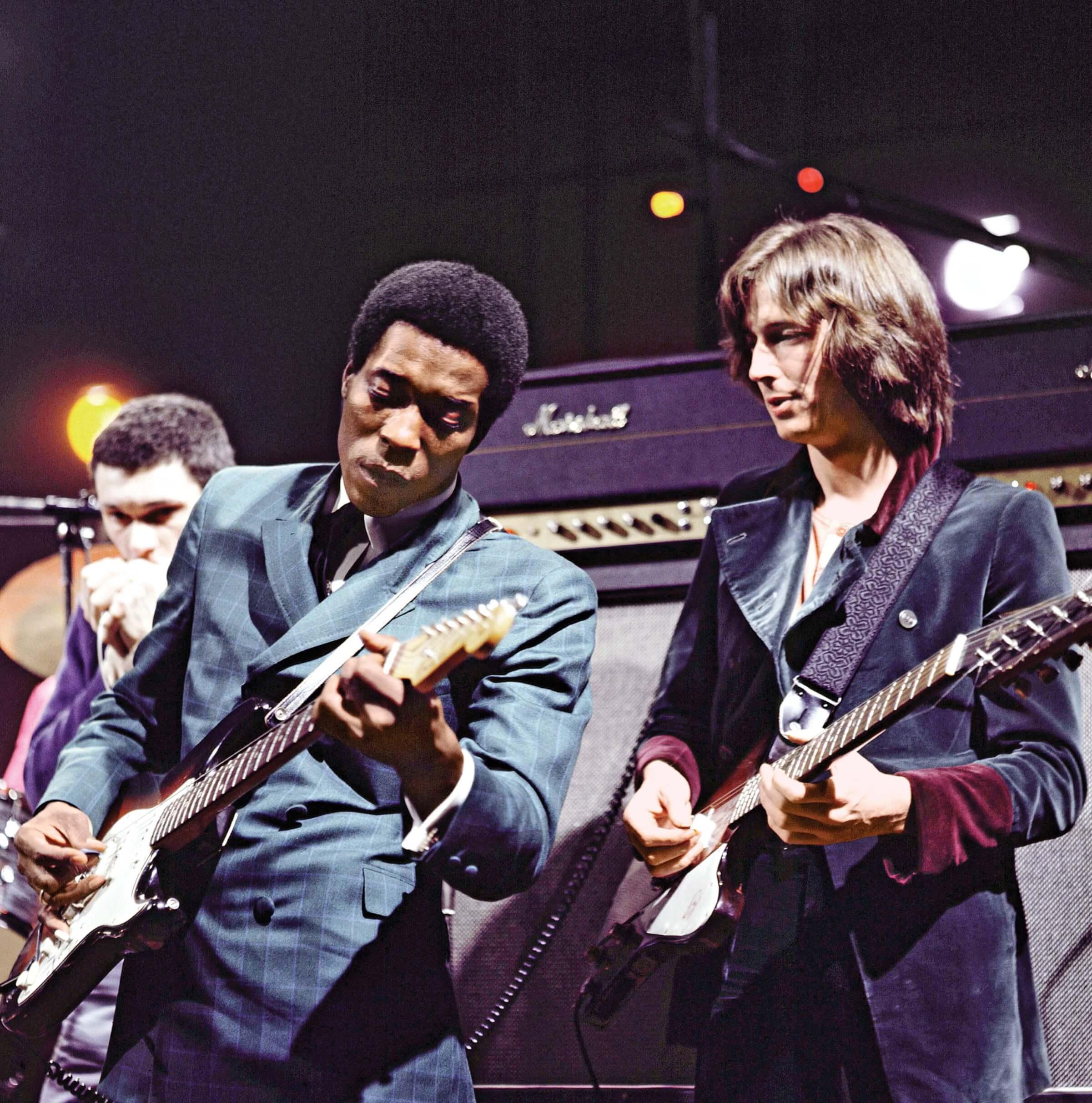
Guy with fellow guitar great Eric Clapton in England in 1969
“I think I owe you whatever you paid for if you come to see me play."
When I saw you at the Legends club in Chicago, you were surrounded by family and friends and seemed very happy. Does contentment make it hard to play the blues?
When you are doing this for a living, you do it for the people who pay to see you. So you worry about them more than you do yourself. I look out there and I make the lights come on and I say, “I want to watch some faces so I can see [if] they got frowns on the face or a smile.” And I’ll try to hit some licks on the guitar, and sometimes it works.
What keeps you hopeful nowadays?
I’m still not on crutches yet, and I still can let some people know who Muddy Waters was, B.B. King and people like that, because I always do that when I go play. I play more of their music than I do my own.
You’ve said you were always shy. Was that a problem early in your career?
I’ve been fired once in my life. It was the first time I got a chance to play music. I was pumping gas at a Louisiana service station, and a guy came and asked me how much I made. He said, “I can pay you a little more than what you make here if you come and play at this club.” When I got there, I think it must have been about 14 or 15 people. And I said, “Well, I’m gonna sing, but I got to turn my back to the audience,” because I was too shy. He said, “No, you got to turn around.” I said, “Not tonight.” And he fired me. Someone told me to drink [a] glass of wine, and I’ve been [facing the audience] ever since.
What’s the best advice you’ve learned?
I didn’t think that I was good enough. I was listening to other people [who were] so good, I was saying, “I ain’t ever gonna be that good.” So I’d assume I’d make a fool out of myself. But they kept telling me, “You are better than you think you are.”
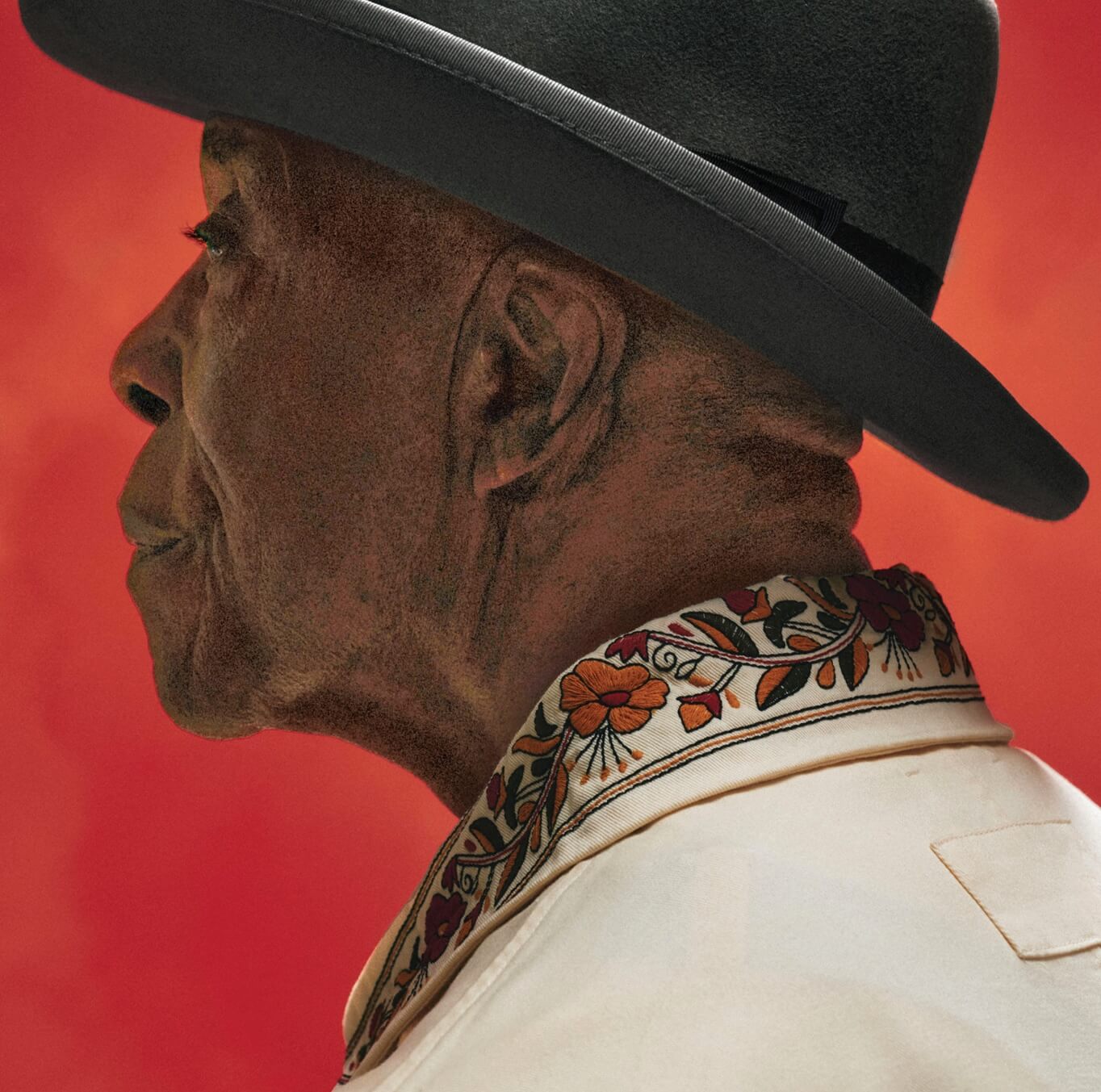
Guy has been putting out blues records since the late 1950s. His latest LP, “Ain’t Done With the Blues,” debuted at No. 1 on Billboard’s blues chart last year.
To watch Buddy Guy talk about his career, go to aarp.org/buddyguy.