











































There we were, eating our way through Spain's Basque country, the land of codfish and anchovies, the hotbed of cutting-edge cooking, and what did we become enchanted with? French toast. Or rather, the Basque version of French toast.
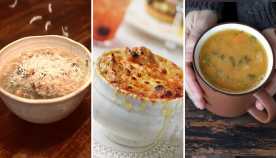
In a basement cooking school in San Sebastián's cobblestoned Old Town, it was simple and comforting: soak yesterday's bread in milk infused with cinnamon, sugar, and vanilla, then sauté it, and serve it for dessert. Homey slices, golden-crusted from the egg and flour, each bite yielding a warm milky fluff of cinnamon and lemon.
As we sampled our creation, I was busy writing in my grease-stained notebook "custardy, barely sweet...yum." Judy Kravitz, a friend from New Jersey, was snapping photos of the final dish, known here as torrijas.
Coming as it did after the thoroughly delicious red piquillo peppers stuffed with cod that we had just made, it was the perfect ending to an afternoon filled with culinary excitement and invention. And it was just the beginning.
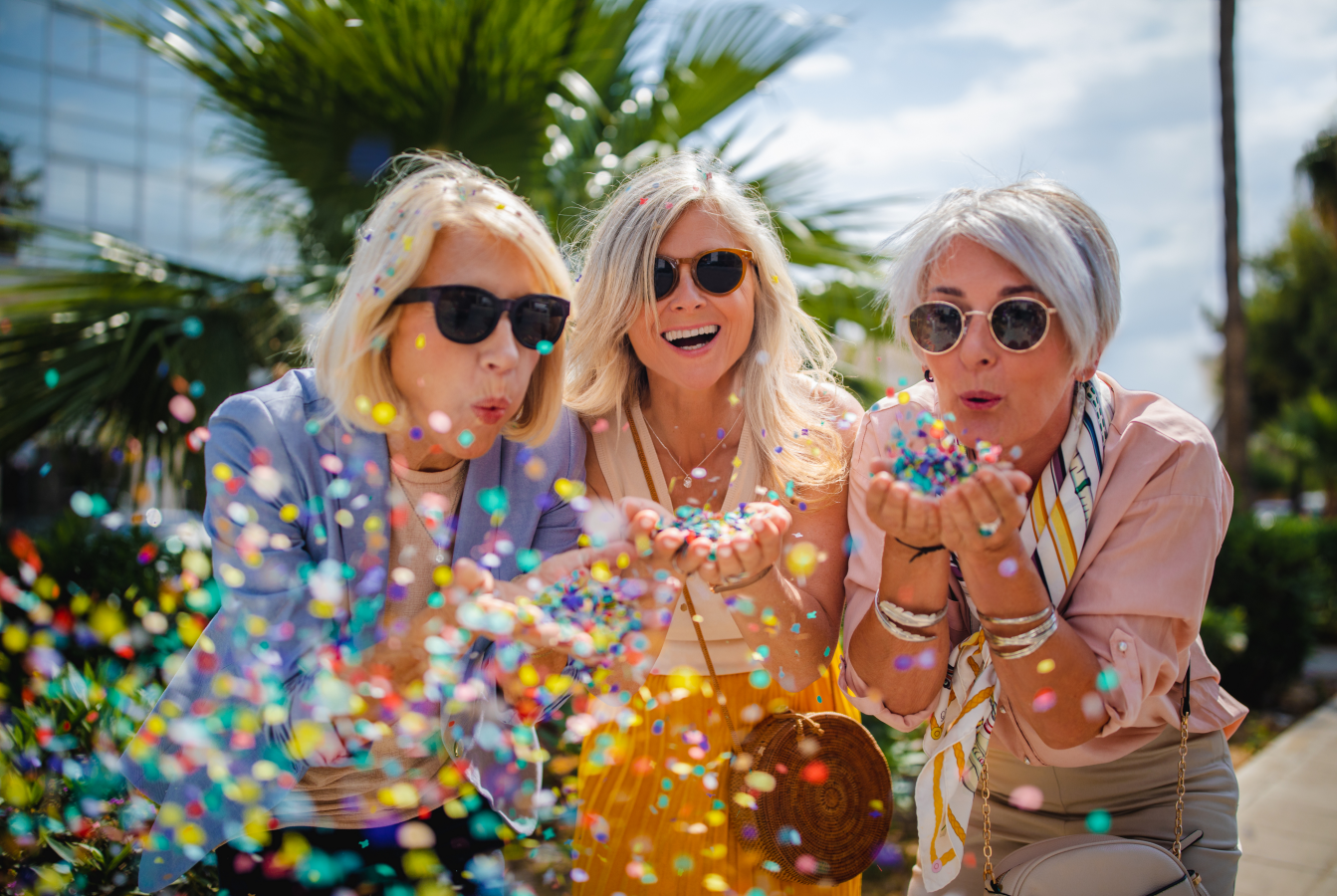
We were eight women of middling years on a weeklong gastronomic sweep through Spain's Basque country. As restaurant critic for The Washington Post for 23 years, I had visited France, Italy, and the Far East. But lately, everyone had been talking about Spain—and San Sebastián, in particular—as the new world center of creative cooking. The last time I was in Spain was in 2000, to spend two days at the futuristic restaurant El Bulli—sampling savory ice creams, warm gelatins, and deconstructed soups. Now even American chefs were talking about "molecular gastronomy," a new approach to cooking that involves rethinking everything from temperature to texture to taste.
The Internet is full of food-and-cooking tours of Basque country, but none were being held on dates when I could attend. So I decided to put together my own tour. I wanted to visit half a dozen of the region's most notable restaurants, as well as several cooking schools. I also wanted to visit the Guggenheim Museum, architect Frank Gehry's confection in titanium, stone, and glass, which brings to the region hordes of tourists and money to support these gastronomic experiments. Made for Spain, a travel agency that specializes in customized food tours, helped with the details.
To make the trip affordable, though, I needed six or seven companions, so I sent messages to nearly my whole e-mail address book. An initial two dozen eager responders pared themselves down to seven women.
"I plan to walk a lot," e-mailed Denise Klein, a friend who came along not just for the food but because we'd always wanted to take a trip together. Linda Kamm, my old college dormmate, wrote, "I'm generally more interested in restaurants that appeal to the general populace." Others were eager for everything: "Don't stint on any restaurant experiences—I'm looking forward to all of them," wrote Ginny Sloan, a friend of Marcia Greenberger, a longtime acquaintance who also signed on.
It was shaping up to be my kind of trip: food, food, from morning to night, shared with a handful of close friends.
San Sebastián is a city of 185,000—twice that in the summer—with sweeping, pristine beaches strung along its edge so that sand and surf serve as the town walls. The city, especially in the rococo Old Town, is packed with tapas bars, open to the street and displaying tapas, known here as pinchos, from one end of the bar to the other. People sample as they wander—open-face canapés of pimiento salad, mushrooms in cream, foie gras with mango, or small squid that squirt when you bite into them. In addition to cold tapas from those lined up on the bar, you can order hot ones and wait for them while sipping txacoli, perhaps the world's lightest, most refreshing white wine.
The locals eat dinner late, rarely before 10 p.m., but for Americans used to dining earlier there's no danger of starving. Just after eight o'clock on our first night in town, we set out with our food-loving hotel manager and joined the rugby fans from a nearby tournament swarming the Parte Vieja—the Old Town. The streetlights were as dim as candles, giving the neighborhood the look of a public dinner party. One crowded bar blended in with another as we moved from one to the next, quickly downing five kinds of anchovy toasts—some with pepper relish, creamed crab, or sea urchin—at Txepetxa, then a few doors away at La Cepa capturing a picnic table and devouring trays of filmy Iberian ham and chorizo. Each dish costs a couple of euros (about $2). "Let's just stay here and eat more of this," suggested Susan Hirsch, another friend of Marcia's, but Ellen Ficklen, a friend from Washington, D.C., and I had lists of tapas bars we were eager to try.
We did linger at La Cuchara de San Telmo, tucked into a brick alley and out of the stream of foot traffic. Large, slatted wood tables—outdoors, with no chairs—were surrounded by athletes swilling beer and demolishing dozens of small platefuls of tapas. We pounced on a table and crowded it with foie gras and roasted duck in orange sauce, risotto with Gorgonzola, and cod tempura. The meal looked like it belonged at a fraternity party catered by a three-star chef.
Then, as the rest of San Sebastián went on to dinner, we returned to the Villa Soro, a 19th-century mansion where we were spending the week, and barely found appetite for the tiny almond tart at our bedside.
"Ninety-nine percent of Basque men cook," our courtly driver, who had introduced himself as Nasser, said as he sped along San Sebastián's beaches past Mount Igeldo and into the mountains surrounding the city en route to our first cooking-school lesson. Most of the men cook at private clubs called Sociedades Gastronómicas, he told us. The sociedad that he belongs to has 150 members who pay $300 a year to belong. He often cooks for (and serves) 20 people at the club.
His specialty is salt cod, a traditional Basque dish. "It is very delicious," he said as I watched his articulate hands abandon their grip on the steering wheel. "I must soak it for three days in water or it would be too salty, then I bake it with saffron and lemon and onion." I wanted to tell him that I'd do the gesturing while we were careening along the mountain highway, but he gripped the wheel just in time.
"Women are not allowed to cook or even wash dishes," Nasser added, though they are allowed to dine at the club a couple of times a month. That's a hole their foremothers dug for them: it is said that the sociedades were the inspiration of 19th-century women who wanted their men to have a place to socialize free from the temptation of other women.
Sociedad members take their food very seriously—and may be one reason why some of the world's most innovative young male chefs hail from this region. On a tour of San Sebastián later in the day, another guide would treat us to a walk-through of Gaztelubide, a famous sociedad founded in 1934 when 44 members split off from an older one over the brand of cider it was serving.
Finally, Nasser turned the van down a steep path. At its end was the 200-year-old stone villa that was our destination. Natalia Martínez-Arroyo Muñoz, an elegant blond woman who wore a chef's coat as if it were Dior, stood waiting to invite us into her kitchen for a cooking class.
"Look at that sink. I've never seen one so deep," Marcia said, running a hand along its tiles admiringly. Linda and Judy were examining the ancient iron stove.
Natalia quickly brought us to order and handed out recipes for traditional Basque lamb stew, a dessert of puff pastry and cream, and appetizers—our favorite being shrimp, quail egg, and peppered vinaigrette arranged in a porcelain spoon as a one-bite hors d'oeuvre.
The three-hour class was a lecture-demonstration rather than a hands-on cooking class, and Natalia kept up a steady stream of comments as she prepared the food. "Always add salt to the cooking water when the water is boiling, not before, and immediately add the vegetables," she said. She paused only to go into the garden for mint to flavor our orange juice, then began to sauté the lamb. "Never add salt at the beginning when sautéing lamb or fish—only at the end, so it doesn't draw the water out."
Back in the van, we shared our impressions. We had learned a lot, had taken copious notes, and were impressed with Natalia's cooking techniques, especially her trick for covering the artichokes with a round of parchment paper with a hole cut in the middle, to keep them submerged in water as they boiled. But for all her talk about salting, the lamb stew tasted as if it had none. Coming off our tapas tour and its scintillating tastes the previous evening, the whole meal seemed surprisingly bland.
While the new Basque restaurant chefs are competing to invent the most dazzling, startling dishes, challenging the diner's taste buds and expectations, some of the more traditional cooking schools, perhaps in overreaction, have gone the other way, shying away from seasonings and cautious with adornments. We were to experience the contrast many times during the week: tradition followed by invention.
After two days of tapas, cooking classes, and other excuses for nonstop eating, we were ready for a cultural interlude at the Guggenheim, which I began to think of as our between-meal palate cleanser. The museum, in nearby Bilbao, is even more stunning than its photos depict, since the changing light on the billowing titanium walls makes them seem nearly alive. And it looked more immense than I'd anticipated, particularly from a balcony overlooking Richard Serra's colossal snake sculpture.
We spent the morning touring the museum and then walked over to Zortziko, Bilbao's most celebrated restaurant, where chef Daniel García took us behind the scenes for a formal cooking lesson, along with an eight-course lunch.
"This is the most precious part of Basque cuisine," García said as he held up a plate of anchovies. The small fish have been a mainstay of Basque cuisine for centuries; even today Spain consumes three fourths of its anchovy production.
García quickly turned his fresh anchovies into hors d'oeuvres: they were filleted and sprinkled with olive oil, sandwiched between bread sliced nearly paper-thin on a ham slicer, then sautéed. The bread became a mere crackle encasing the succulent anchovies. The second appetizer was foie gras whipped to a light mousse and layered with caramelized pears and wine jelly. The foie gras was double creaminess: as light as whipped cream, as rich and silky as ice cream, the pears just respectfully sweet. Its preparation involved a bowl of ice, a thermometer, and an assistant.
"This is just the kind of dish best left to a restaurant kitchen," I whispered to Ginny. "When I saw the blenders and thermometers, I knew we weren't going to make these dishes at home," she replied.
Susan didn't care. "That dish blew me away." Not that she meant to slight the fried oysters with orange peel and potato purée that followed, or the rare tuna in cold vegetable soup, or the black cod, or the pigeon. This was the elegant alchemy we'd come this distance to try.
That lunch also inspired us to ask more questions at all the restaurants where we dined. That very evening we started turning our restaurant meals into informal classes.
At Etxebarri, a rustic, stone mecca of wood-stove cookery where we had dinner, we asked to meet the chef and tour the kitchen after a feast that started with the best Iberian ham we'd ever tasted, lobster and artichoke salad, and soft and tangy chorizo. Then came the extraordinary wood-grilled entrées: garlicky fish, perfectly crusty yet blood-rare steak, even grilled risotto and a grilled apple tart with smoked ice cream.
"How do you smoke ice cream?" asked Marcia once we'd crowded into the closet-size kitchen. A shy young man was showing us the steak machinery, a kind of giant George Foreman grill. Despite our language barrier, he explained that the ice cream started with milk, not cream, and was reduced in a flat clay paella pan on the grill so that by the time it was as thick as cream it had absorbed the surrounding smoke.
A few feet away, an argument was building among our group.
"Where's the chef?"
"He is the chef."
"Don't be ridiculous. He's too young to be the chef."
Ellen had brought along an article about Etxebarri from Vogue magazine, and she showed it to the young man. He looked puzzled by the article, then embarrassed. He was indeed the chef, Victor Arguinzoniz, age 35, but cooking like a seasoned master.
On the trip back to the hotel, we chewed over his modesty. "He seems so humble," said Susan. "Perhaps not for long," I replied, having watched a lot of young chefs who learned over time to believe their own press.
One restaurateur who clearly deserves the acclaim he is getting is Juan Mari Arzak, whose restaurant we visited several days into our vacation. Arzak started Spain's experimental frenzy when he took over the family restaurant from his mother in 1967. As we entered Arzak's cozy dining room a few blocks' walk from our hotel, we were struck by the simplicity of the restaurant's décor. Yet the food was anything but simple. A parade of brightly colored hors d'oeuvres arrived in swift succession—pineapple with peppers, blood sausage with apple, plantains with fish mousse. This was followed by flowers of caramelized mango stuffed with foie gras mousse on a "stem" of shredded lettuce with oil and tomato vinegar, then oysters in a filmy gauze of bacon-and-potato "paper."
Every time we looked quizzical, a waitress would explain the dish's technique. Then Arzak himself started showing up to reveal each dish's recipe.
A cube of rare lamb, loosely wrapped in a tall veil of beige gauze, which melted when sauce was poured on: "The veil is milky coffee cooked between two Silpat baking sheets."
A flower-shaped poached egg: Arzak brought to the table a very fresh egg and a cup lined with plastic wrap, then broke the egg into the cup. "Season it with salt, pepper, white-truffle oil, and duck fat," he instructed, "then twist the plastic tightly to enclose the egg and tie it. Let it rest for a day, then poach it."
The dessert array was like a toy box, with chocolate "hamburger" and pepper-spiked chocolate ice cream. Some sweets bubbled with dry ice; others startled with accents of olive or spinach.
Then we were invited into the kitchen. To our surprise, it wasn't the magic shop we imagined it would be. It was just a kitchen.
On the walk home, everyone relived the menu, dish by dish, high on the colors, the shapes, the sheer fun. Arzak had made it look easy. After his instructions, we could certainly approximate some of the dishes at home. But to prepare most of them, we'd need Arzak's genius—and a staff to back us up.
Between restaurants and classes we toured food markets, including the weekly outdoor market at Ordizia.
One morning we toured the shops, the market, and an anchovy factory around Getaria, less than an hour from San Sebastián. The Nardin anchovy factory is a family business that looks like an overgrown garage. We nodded to the women engaged in the laborious work of trimming the tiny fish and arranging them one by one in the cans. The fish are processed—smoked, vinegared or salted, and covered with olive oil—as soon as they arrive from the pier, then left to cure up to two years. "I'll never take a caesar salad for granted again," Linda said.
We had remarkable anchovies for lunch afterward in an old-fashioned lace-curtain restaurant named Elkano that overlooks the sea. Father and son, Pedro and Aitor Arregui, cure their own anchovies and tuna, which at lunch were followed by briny clams, blue lobster from their basement tanks, then salad and vegetables. The climax of the meal was fish—sole, turbot, and hake—served alone, un-adorned, and perfect, always whole except for the gelatinous hake jowl that we were instructed to eat in one bite. We'd never had fish more resoundingly succulent.
Friday was our last day in San Sebastián, and after five days I thought we had scaled its culinary heights. Once again, I was in for a surprise. After a morning off, we were way behind schedule when we arrived at Mugaritz restaurant. Owned by Andoni Luis Aduriz, a 34-year-old chef who has been described as the "boy wonder of global cuisine," Mugaritz—with its Zen-like atmosphere—was just what we needed after a week of nonstop activity.
"Everything here is made in the moment—the herbs, the sauces, everything," said the maitre d' as he ushered us in. He was nearly whispering.
"When does the masseuse come out?" Ginny muttered.
We launched into the first of eight courses, a warm, gingery gelatin disk embedded with wild asparagus tips.
"I feel like praying every time I get a vegetable," said Denise as the waiter placed a bowl of tiny flowers with baby eggplants, beans, and greens before us.
"I can't believe this is just beef," added Susan when the hunk of beef cheek arrived, having been cooked with red pepper for 45 hours until the two nearly melted together.
And on it went until dessert.
"Omigod," said Ellen and Ginny in unison. They were diving into the torrijas that the waiter had brought. It was French toast, our favorite dish from the cooking schools, but this time, precise one-inch cubes, yolk-rich and soft as whipped cream in the middle, its surfaces crackly like the caramel on crème brûlée. Once more, today's chefs had brilliantly updated tradition.
We flew home vowing to return to San Sebastián. We'd left several famous chefs' restaurants untried, countless tapas bars unvisited, the foods of other seasons untasted. But we'd sampled the Basque country's newest creations and the traditions behind them. Those memories, a few tins of anchovies and olives, and a stack of recipes would have to hold us until our return.


Tell Us WhatYou Think
Please leave your comment below.
You must be signed in to comment.
Sign In | RegisterMore comments »