Jacob Hacker: Retirement Insecurity
By: Daniel Gross; Source: AARP Bulletin Date Posted: 2006-03-15 08:44:00-05:00
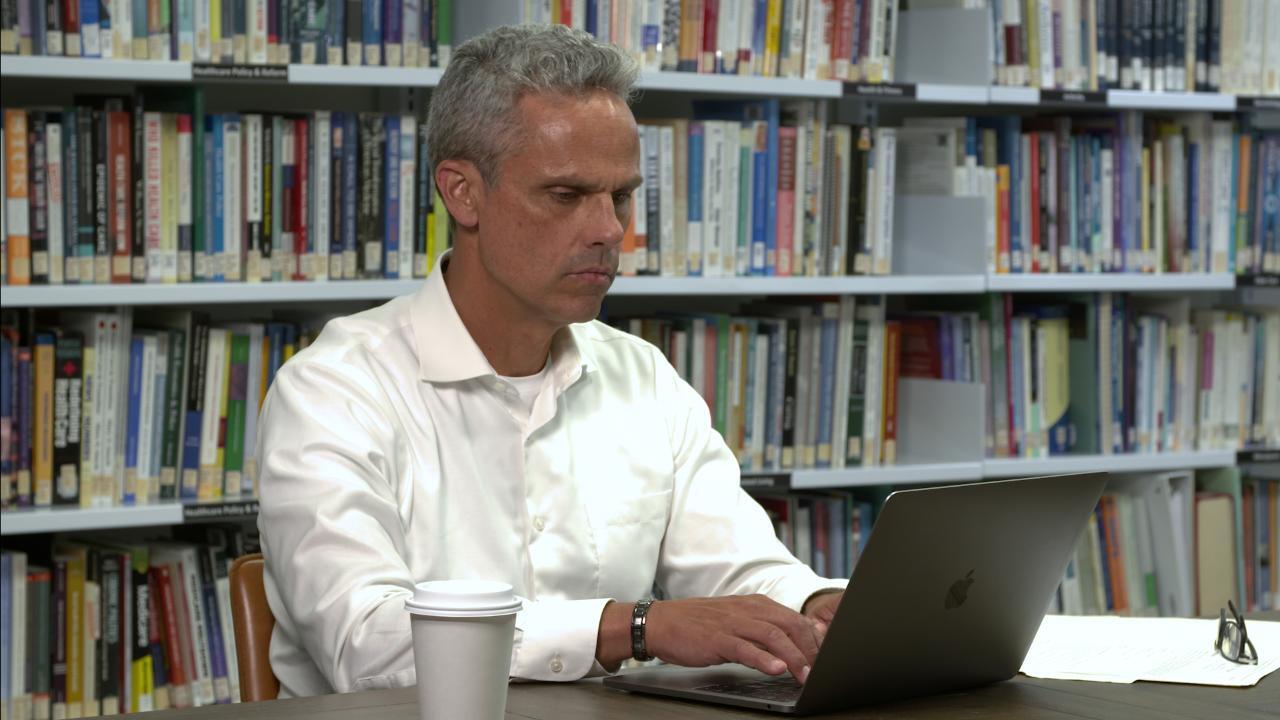
Jacob Hacker, a Yale University political scientist, has emerged as an incisive voice on issues relating to retirement security and income volatility. In his forthcoming book The Great Risk Shift: The New Economic Insecurity—And What Can Be Done About It (Oxford University Press), Hacker, 35, explores trends such as the decline of traditional pensions.
What is the impact of the erosion of pensions for the American worker?
The pension crisis in America is a major part of what I call the "great risk shift"—the growing transfer of economic risks and responsibilities from employers and governments onto workers and their families. Historically, American retirement security was based on what experts called a "three-legged stool": Social Security, traditional defined-benefit pensions and personal savings. It's crucial to recall that two of the three legs were essentially guaranteed. Like Social Security, private pensions used to give workers a predetermined monthly income in retirement, regardless of exactly how long they lived or how well the stock and bond markets did. Over the last 20 years we've gone from having two stable legs to only one. Families' three-legged stool of retirement security is a lot more wobbly, and financially more and more Americans are finding themselves falling without warning.
What other risks are American workers facing?
Workers face new and intensified risks from three main directions—from the job market, which has become more uncertain and anxiety-producing despite robust employment numbers; from the restructuring of pension and health care benefits; and from the growing challenges many working families face balancing work and family.
We can see these risks in many places: the rising number of Americans filing for bankruptcy, the growing proportion of mortgages that are in foreclosure, the rising ranks of those without health insurance. Perhaps most directly, we can see the great risk shift in the growing instability of American families' incomes. I've calculated, in fact, that family incomes have become roughly twice as unstable since the early 1970s, that this instability has been rising even faster than income inequality, and that the rise is just as steep for the well-educated as for the less well-educated.
What risks do older workers face that differ from younger workers'?
Older workers might be thought to have it easiest. After all, they are receiving, or at least are close to receiving, Social Security and Medicare. But their medical costs are higher. And if they're laid off before they're eligible for Medicare, private insurance coverage is astronomically expensive or unavailable.
Today's older workers are also the generation—perhaps the last generation—promised generous health and pension benefits in retirement. There's a huge risk that more and more of these benefits, which these workers planned their whole lives around, will be pulled out from under them. And Medicare and Social Security aren't perfect.
What can people do to lower their exposure to risk?
Above all, they should demand that their public officials wake up to the problem. The great risk shift isn't a natural occurrence. Sweeping changes in the economy have propelled it. Yet America's corporate and political leaders could have responded by reinforcing the floodwalls that protect families from economic risk. Instead, many of them are busy tearing the floodwalls down.
We need to take a different tack—to rebuild the effective public sector-private sector partnership that provided a broad umbrella of risk protection in the past. That has to include personal steps: funding a 401(k) when it's offered, keeping spending in line with income, not borrowing excessively. But the bottom line is that these risks cannot be dealt with by individuals on their own; they need to be spread across all Americans.
How do we compare with other advanced nations when it comes to pensions?
Social Security is not particularly generous in cross-national comparison. What sets America apart is how much more we rely on private-sector pension benefits, which enjoy huge tax breaks. The big strengths are the flexibility of the model and the innovations in financial markets it has encouraged. The big weaknesses are that it's increasingly incapable of providing basic retirement security and it's highly skewed in favor of well-off Americans who are least in need of help for their retirement.
In the long run, is it better for workers to have defined contribution plans like 401(k)s or traditional defined benefit plans?
There are trade-offs, but defined benefit plans still have an essential role. They are mandatory, employers contribute all or most of the dollars that go into them, they are professionally managed under rules that prevent common errors like overinvesting in company stock, and they pool the key risks to retirement income (in particular the "risk" of living a long time in retirement and of stock market downturns).
Defined contribution plans have none of these safeguards. They're voluntary, so many workers fail to contribute, or make insufficient contributions. They shift all the stock market risk onto workers, and they don't provide a fixed benefit throughout retirement.
Do you feel there's any obligation by companies to honor a promise? Should there be laws protecting pension holders?
No one wants corporations to go under, and there should be ways in which government can step in to lessen the blow. But contracts with workers are contracts. All that said, holding companies' feet to the fire isn't going to deal with the great risk shift. That will require nothing less than reforging the American social contract. My hope, cautious but real, is that we can emerge from all this with a stronger sense of shared fate, not, as now seems the trend, an ever-weakening one.
Additional Related Links
Pension Concerns? (March 2006)
Avoid 401(k) Neglect (March 2006)
The Great Risk Shift (AARP Prime Time Radio)


Share
preview