
























































BU When Is It Time to Quit Driving?

How Americans are making a critical—and difficult—decision.

By: Reed Karaim | Source: AARP Bulletin Today |  | November 16, 2006

driving on the highway

Three years ago George Russell Weller, then 86 years old, plowed his Buick LeSabre into a crowded farmers' market in Santa Monica, Calif., killing 10 people and injuring 63. Weller was convicted of vehicular manslaughter in Los Angeles Superior Court.

Across the country in Lake Monticello, Va., Jack Hourihan, 80, regularly drives an ambulance. He handled 100 emergency calls last year, covering about 4,000 miles, much of it with a sick or injured person in the back, and he's never had as much as a fender-bender.

So, are older drivers too much of a risk or not? There's no easy answer. Even statistics deliver a mixed message: Older drivers generally have fewer accidents per driver than the national average—but they have more accidents per mile of driving.

By 2030 the 65-plus population is expected to double to 71 million and make up a quarter of U.S. drivers. By then there will be 9.5 million Americans 85-plus and almost all will have spent most of their lives driving. Many will be fully capable of remaining behind the wheel—even of teaching younger drivers. Yet there is no question that drivers 85-plus have notably higher accident rates.

Weller's accident ignited a national debate, re-ignited by his trial: When is it time for older drivers to give up their keys? Should government play a role in the decision? How can families help?

These issues are huge in a country where driving can be synonymous with independence. They "are only going to get more pressing," says Elinor Ginzler, who oversees AARP's driving initiatives. Public concern "is going to go through the roof when that age tsunami hits us."

The loudest reaction to the Weller tragedy was calls from some politicians and opinion makers for mandatory testing of drivers 70 and older. At least 27 states now set an age—typically 65 or 70—at which drivers must begin to renew their licenses more frequently or in person, but only New Hampshire, Illinois and the District of Columbia require road tests for older drivers.

In some states, calls for restricting older drivers have faded with recognition of the complexity and expense of written or on-road retesting. Such retesting hasn't "shown to be particularly predictive of who's going to crash," says Lori Cohen, senior program director of driver fitness for the American Association of Motor Vehicle Administrators.

The issue, experts increasingly say, is not one of age but rather one of physical and mental fitness. "Birthdays don't cause accidents—health issues do," says Joe Coughlin, director of the MIT AgeLab, which conducted a national survey of older drivers in 2002 with the Hartford Insurance Co.

The first stages of Alzheimer's or dementia, glaucoma or other eye diseases, arthritis and muscular infirmities can all interfere with the ability to drive. So can the side effects of many medications.

That's why state DMVs are "paying closer attention to drivers who are medically at risk, and older drivers are a subset of that," Cohen says. In 37 states, medical review boards step in when licensing agencies are alerted by police or family members and question a driver's physical or mental capability. Six states require doctors to report certain health problems to the DMV.

AARP favors all types of periodic retesting of all drivers to assure that they remain capable. "It's important as people get older, but it's important no matter the age," Ginzler says. "If your ability to function has diminished to an unsafe level, you shouldn't be on the road."

As a researcher on safety among older drivers, Barbara Freund has come to support age-based mandatory testing. Studies have found that almost a third of people 65 and older "have some kind of cognitive impairment, and 25 to 90 percent of those people are undiagnosed," Freund says.

"This is not against seniors, this is pro seniors," says Freund. "A lot of times we can help them stay on the road longer if we treat these conditions early enough."

New high-tech methods could make assessing huge numbers of drivers more manageable. At the Eastern Virginia Medical School's Center for Geriatrics and Gerontology, Freund designed a computerized simulator in which drivers navigate a "virtual" environment, much like pilots in a flight simulator. She has graded the skills of hundreds of older drivers who asked to be tested or were referred by their families, physicians or the Virginia DMV, and found that reacting correctly when several stressful things happen simultaneously can be particularly challenging.

In the Weller case, the California Highway Patrol concluded that he mistakenly believed his foot was on the brake when it was on the gas—so-called pedal confusion. "George Weller's not alone in pedal confusion," says Freund. "I've got a file of them, and see it in the simulator. They recognize they're not stopping, so they press the pedal harder. They can't sort out what's happening."

Until now simulators have served researchers but have been considered too user-unfriendly and too expensive for DMVs. Freund is working with the Raydon Corp. of Daytona Beach, Fla., to develop an affordable simulator that helps screen drivers with declining skills—and allows drivers to safely practice challenging traffic situations.

At five nonprofit senior safety centers, Florida is using the DriveABLE program developed by Canadian neuropsychologist Allen Dobbs, who studied driving errors common among people with dementia or other cognitive impairments. In a DriveABLE test, the subject is guided through computer-based tasks that assess mental and motor skills relevant to safe driving. In some cases, the subject is then tested on a road course designed to reveal errors by drivers who are unsafe because of cognitive problems.

Skills may inevitably decline, but not necessarily enough to force a driver off the road completely. A trend likely to grow for older drivers is the use of restricted licenses, which limit driving to designated places or times—as determined by an examiner. Iowa, which has been in the forefront of the movement, has issued thousands of restricted licenses to drivers 70-plus, says Kim Snook, field services manager for the state Department of Transportation.

"The reaction has been very positive," Snook says. "It does take more time because the examiners have to drive out to these tests, but that's a small price to pay to allow these drivers to stay on the road safely."

Most older drivers stay ahead of their DMVs on that score, the MIT AgeLab study found. They restrict themselves as they age, avoiding situations that make them uncomfortable—driving on interstates or at night, for example. This is particularly true of women, who often stop driving while they're still capable behind the wheel, says Sandi Rosenbloom, a professor of planning at the University of Arizona in Tucson, who has studied driving patterns for years.

Still, drivers can be blind to their own shortcomings. Taking cues from others—including other drivers—can help. "If people are honking or gesturing at you, it's not just that people have become more rude," Freund says. Older drivers "need to realize that they must have been doing something that other drivers find incorrect."

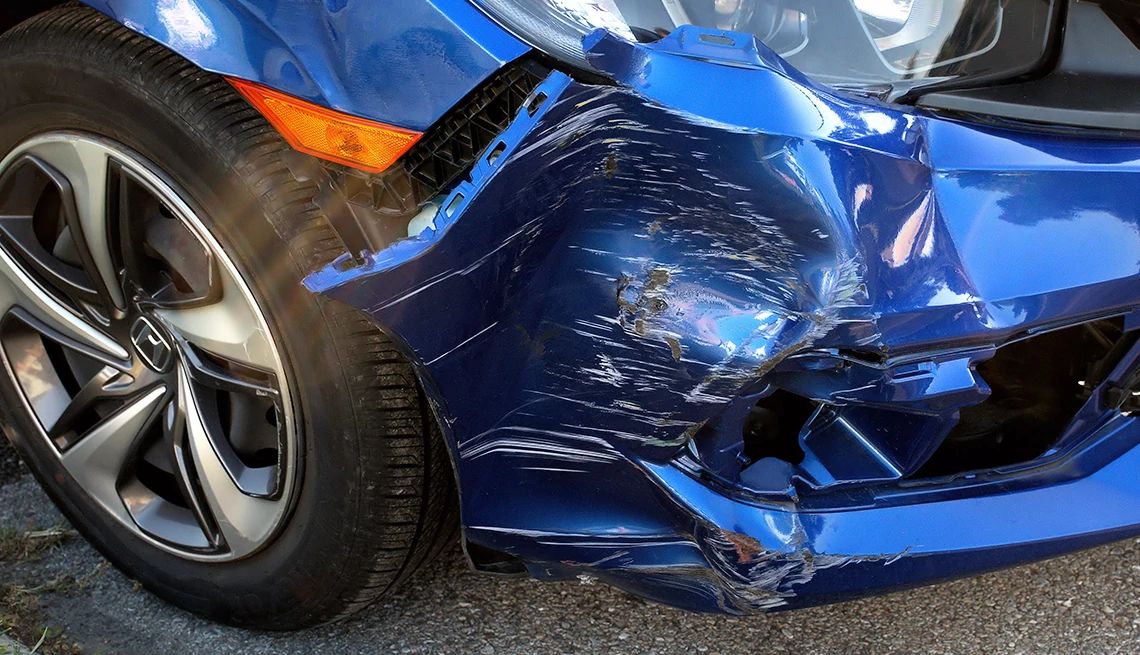
When should family members or friends step in? AARP's Ginzler says the driver's car provides a starting point: "See if there are little dents and scrapes that are indicators that they're having trouble." If there's enough damage to make you suspect that a driver's skills are slipping, riding along is the best way to evaluate a driver's skills.

Though suggesting that a parent or spouse give up driving can be touchy, most older drivers would prefer to hear it from someone close to them, the MIT AgeLab study found. Two years ago AARP and the Hartford published a booklet called "We Need to Talk" that discusses how adult children can best broach the subject with their parents. Next year AARP is planning to roll out "We Need to Talk" seminars that will include tips on the most effective approaches.

"It's all about having these very difficult kinds of conversations," Ginzler says. "We recommend that you lead with the idea of safety, both the safety of the driver and the safety of people around the driver. It's a message people are very receptive to."

When drivers give up their keys because of health, experts agree, society has a responsibility to guarantee them other ways to get around. The lack of alternatives to cars suggests the need for caution when considering how to deal with the wave of older drivers coming down the road.

"The overwhelming majority of older drivers are safe," says Sandi Rosenbloom. "We always want the simple, sweeping approach to solving problems in this country. But this is a problem where we need a scalpel, not an ax."

Reed Karaim is a freelance writer in Tucson, Ariz.

More Articles on Family »

preview


AARP Member Benefits

Travel Discounts

Member Benefits: Cruise

Travel Discounts

AARP Travel Center powered by Expedia has deals on cruises, car rentals, airfare, hotels and vacation packages.

Health Products & Services

Insurance, med supplies & drug discounts.

Financial & Legal

Guidance for retirement planning.

Insurance Products

Exclusive products for AARP members.

More to Explore

senior woman and neighbor

Create The Good
AARP is calling on its members to Create the Good in their neighborhoods. Get involved.

Benefits QuickLINK
Find out
what public or private benefits are available for older adults and families with children.