













































Alert
Close

You could win $50,000! First step — an easy retirement quiz. Try AARP's Perfect Path to Retirement Giveaway now!

Highlights

Open

Reebok

Members save on online purchases
and at Reebok
Outlet Stores

Brain Health & Staying Sharp

Watch AARP Live 6/20 at 10 PM ET

Tickets Icon

Tickets From Live Nation

4 for the price of 3

Technical Icon

Spanish Preferred?

Visit aarp.org/espanol

Find Your Perfect Path to Retirement

You could
win $50,000

FALL 2013
national event

AARP presents Life@50+

Come to
Hotlanta!

October 3 - 5

Enjoy three fun-filled days of activities while discovering your Real Possibilities!

AARP TV

Watch episodes of Inside E Street, AARP Live and other AARP broadcasts.

Most Popular
Articles

Viewed

Recommended

Commented

The Author Speaks

Excerpt From 'Wrong: Why Experts* Keep Failing Us—And How to Know When Not to Trust Them'

*Scientists, finance wizards, doctors, relationship gurus, celebrity CEOs, high-powered consultants, health officials, and more

"Success consists of going from failure to failure without loss of enthusiasm."

— Winston Churchill

I'm sitting in a coffee shop in a pediatric hospital in Boston, hard by a 9-foot-tall bronze teddy bear, with a man who is going to perform a surprising trick. I'm thinking of an article recently published in a prestigious medical journal, an article that reports the results of a research study, and he will tell me whether or not the study is likely to turn out to be right or wrong. It's the sort of study that your doctor might read about, and that you might learn about from a newspaper, website, or morning TV news show. It may well be that the results of this study will change your life—they might convince you to start eating or avoiding certain foods to lower your risk of heart disease, or to take a certain drug to help you beat cancer, or to learn whether or not you are carrying a gene linked to vulnerability to a mental illness. But this man won't need to hear any of the particulars of the study to perform his feat. All he needs to know is that it was a study published in a top journal.

His prediction: it's wrong. It's a prediction that strikes at the foundation of expertise and our trust in it.

The man is John Ioannidis, a doctor and researcher whose specialty is calculating the chances that studies' results are false. For someone dedicated to spotlighting the inadequacies of his colleagues' lifework, Ioannidis is pleasant, polite and soft-spoken, even if he discreetly radiates the fidgety energy of someone who habitually packs too much into his day. He looks young for a man heading into his mid-forties, with a slight build, a wavy mop of fine, dark hair, and a thin mustache. Also a bit surprising about Ioannidis is that he is highly regarded by his peers. Communities usually find ways to marginalize those who expose their flaws, but the world of medical research, in which extraordinary talent and effort are prerequisites for attaining even the lowest rungs of recognition, has kept Ioannidis in demand via the field's standard trappings of success: prestigious appointments, including one at the world-class Tufts – New England Medical Center and another at the University of Ioannina Medical School in his native Greece; frequent citations by colleagues of his work, some of which has been published in the field's top journals; and a stream of invitations to speak at conferences, where he is generally a big draw.

There's no standard career path to becoming a deconstructor of wrongness, and Ioannidis took a roundabout route to it. Born in 1965 in the United States to parents who were both physicians, he was raised in Athens, where he showed unusual aptitude in mathematics and snagged Greece's top student math prize. By the end of college, he seemed on track for a career as a mathematician. But he had come to feel the family pull of medicine and, not wanting to turn his back on math, decided to combine the two and become a medical mathematician. "I didn't know exactly what such a thing might be," he says, "but I felt sure there was some important component of medicine that was mathematical." He graduated first in his class at the University of Athens Medical School, then shipped off to Harvard for his residency in internal medicine, followed by a research and clinical appointment at Tufts in infectious diseases. The math had to this point remained in the background, but in 1993, while at Tufts, he saw his chance to even things up a bit. There was growing interest in the new field of "evidence-based medicine"—that is, trying to equip physicians to do not merely what they had been taught to assume would help patients but what had been rigorously proven in studies would help patients. "Amazingly, most medical treatment simply isn't backed up by good, quantitative evidence," says Ioannidis—news that would likely come as a surprise to most patients. Distilling this sort of knowledge out of a chaos of patient data often requires more statistical-analysis firepower than clinical researchers bear, providing an opening for Ioannidis to make a mark.

Topic Alerts

You can get weekly email alerts on the topics below. Just click “Follow.”

Manage Alerts

Processing

Please wait...

progress bar, please wait

Tell Us WhatYou Think

Please leave your comment below.

You must be signed in to comment.

Sign In | Register

More comments »

Entertainment Blog

AARP Bookstore

Discounts & Benefits

From companies that meet the high standards of service and quality set by AARP.

Live Nations

Members save 25% or more when buying tickets in groups of four from Live Nation.

Regal Cinemas movie theater

Members save on bundled purchase of small popcorn, soda at Regal Entertainment Group.

Members can save 10% off all Amazon Kindle e-readers and the Kindle Fire tablet.

Member Benefits

Members receive exclusive member benefits & affect social change. Join Today

Being Social

featured Groups

Book Talk

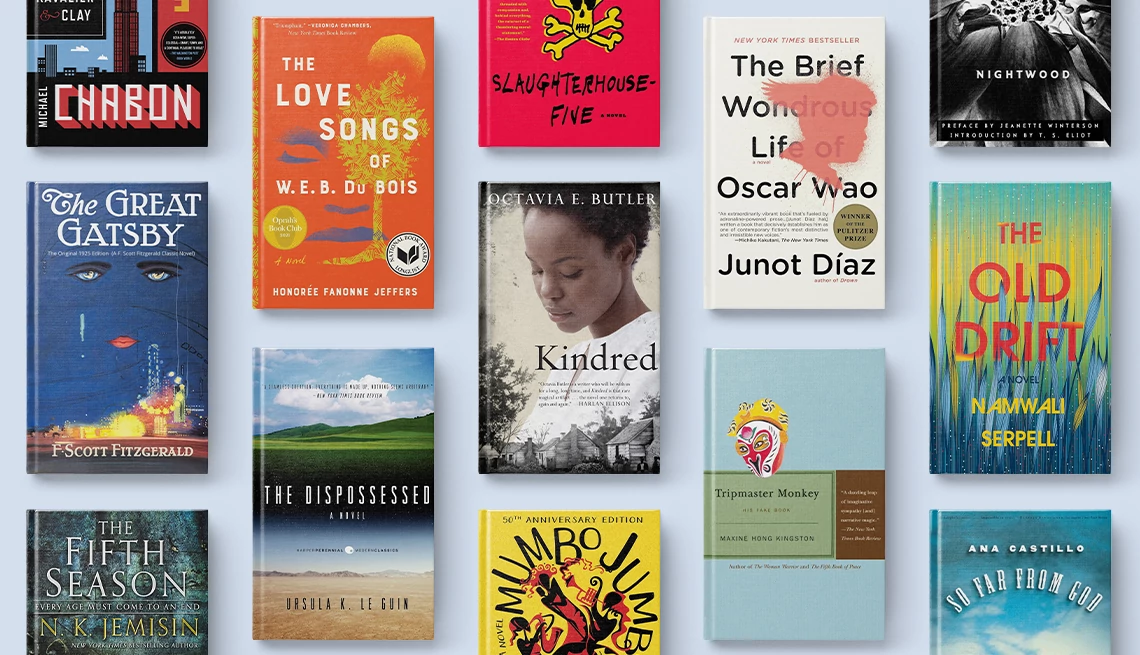
Share with us what you are reading now and who are your favorite authors. Discuss.

Page Turners Book Club

Discuss mysteries, thrillers, and suspense books that keep you flipping the page. Discuss